 mundyewalsh
 The Creative Women interview series chats to women in creative fields, and explores what is at the root of their artistic drive. Creative thinking is fundamental for a fulfilled life, and so understanding and cultivating it through shared experiences, challenges and achievements helps us all thrive.
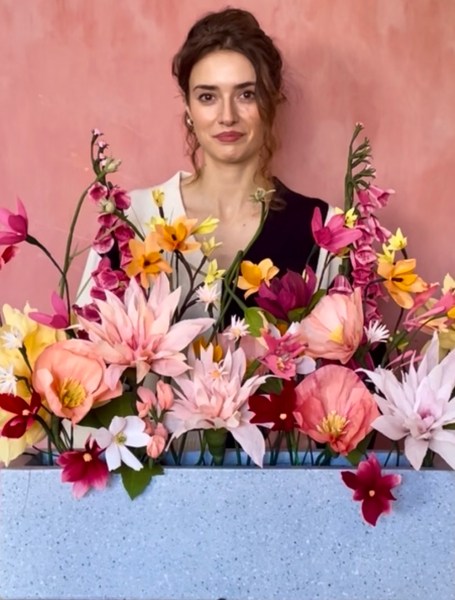
Jessie Beaumont is a self-taught paper artist specialising in intricately handmade paper flowers. Jessie runs her studio Leo Flowers from east London, creating long-lasting floral designs for event and photography props, window displays and private commissions. Leo Flowers has worked with brands including Liberty London and the V&A museum and has been featured in the New York Times.

How did you get started in your craft and what continues to inspire you?
I’ve had quite a roundabout route into what I do. I was always drawn to craft and visual arts from my school years but I hadn’t much idea of how to translate these interests into a career path. I didn’t feel qualified to do anything creative for work without going to art school. I studied English and journalism at university, which led to some really valuable experience that I still draw from now, but it didn’t satisfy the part of my brain that wants to make things! A few years of trying out different companies and sectors for size eventually led me to become a studio manager for creative workspaces. Working alongside all manner of freelancers and small businesses opened
up a whole new world of creative jobs that felt within reach.
When the pandemic hit, I spent hours teaching myself to make paper flowers, and although it was initially just a way to fill my newfound time, it quickly became an opportunity to create something more. I often think that if it wasn’t for the patchwork of my previous roles then I wouldn’t have had the guts to take the plunge and turn Leo Flowers into my day job.
As for inspiration, flowers present endless possibilities in paper – there are so many different varieties, colour combinations, silhouettes, scales to play with. If I’m ever feeling stuck in a rut, looking at floral photography or visiting a National Trust garden is like a tinderbox of ideas for me!
What is your process from ideation to finished product?
It usually starts with a colour palette. Not only does this really help establish the mood, season or sentiment in a design, but it also gives me a direction for choosing the types of flowers I will use in a project. Getting the colour right is really important to me for the success of both an individual flower, and a whole display.
Once I’m set on my colours, it’s likely that I will just get stuck in and start making a prototype straight away. Having a physical object in my hand is a much more tangible starting point to me than working from technical sketches. Often to the dismay of any assistants who may be working with me, I really prefer to just work on instinct when I’m constructing a flower, rather than using templates and precise measurements! I’d like to think this method does tally, as my aim isn’t usually botanical realism – instead, I’m looking to get an impression of the flower, and being too anatomical would take away from this a little. For example, the things that characterise a parrot tulip at first glance would be the wacky colours, the tall silhouette and the fringed petals, and so that’s
what I’ll look to replicate and possibly exaggerate in the paper flower.

How do you maintain resilience during difficult periods? What has been your greatest obstacle so far?
In my experience, it’s pretty normal for creative work to be inconsistent, with busy weeks consumed with big projects, alongside quieter periods. It’s amazing how short our memories can be at remembering and not worrying about how the months wax and wane! Of course it’s disappointing when a project doesn’t come to fruition, but simply looking back on how you’ve managed so far can help summon up some faith in the next thing coming along. It can sometimes be a blessing to have space to pause and recuperate – I know that when I’m busy, I’m really busy, so it’s good to take advantage this time to catch up on admin or just even take some afternoons
off.
That said, I have friends who like to be proactive during a slow month, sending out portfolios to brands they’d like to work with in the future or working on little personal projects. It might not always land a project straight away, but it has absolutely paid off longer term and so I think it can be a good way to expend some of that restless energy.
My biggest obstacle so far is hard to pinpoint to one moment as things go wrong all the time! Something that has been a challenge for me as an individual is fulfilling very tight turnarounds for projects or having multiple projects on the go at once. I have had to adapt my way of working to meet these deadlines, most notably by bringing in assistants to get through demanding workloads. There are a lot of talented freelancers out there, but it is difficult and nerve-wracking to find the right way to share your craft, delegate and ultimately to find people you want to work with and invest in. I’m lucky to have a small bank of great people I can call on and it is something I want to build on in the future.
Imposter Syndrome can be a hurdle sometimes creatively, has this ever affected you? Does being a woman influence your creativity?
I’m sure it does! It sometimes feels impossible to escape the trappings of people pleasing in all aspects of life, including work. There’s nothing wrong with wanting to do a good job, be a pleasure to work with, be adaptable etc, but you do have to speak up and stick to your guns sometimes if you find yourself deferring too much to a client or project team member. Having conviction in your decisions can be tough, especially if you work alone. I started Leo Flowers without a great deal of professional creative experience, and while this probably shielded me from some of the spikier edges of the industry, it sometimes still makes me feel like the rookie in the room. Now with four years of experience behind me, I have to remember that I am usually the expert in my (very niche) field and my perspective is important to the overall success of the project. I’m not sure that the feeling of winging it will ever really go away, but it is helpful to keep in mind that so many of us feel the same diffidence, even the people you might not expect.

What is some advice you return to?
Just get started! There are a million ways to talk yourself out of a project, but being too critical or perfectionist can stop you creating anything at all. You learn as much from your mistakes as your successes, the trick is to just keep going.