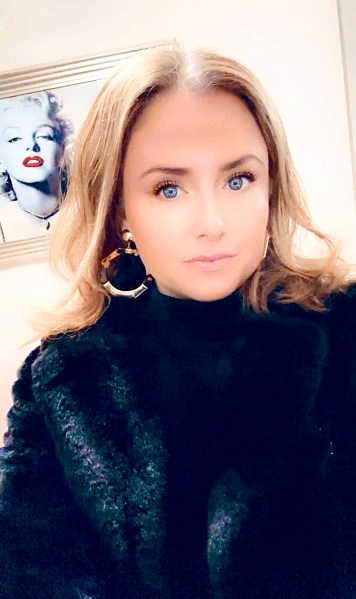
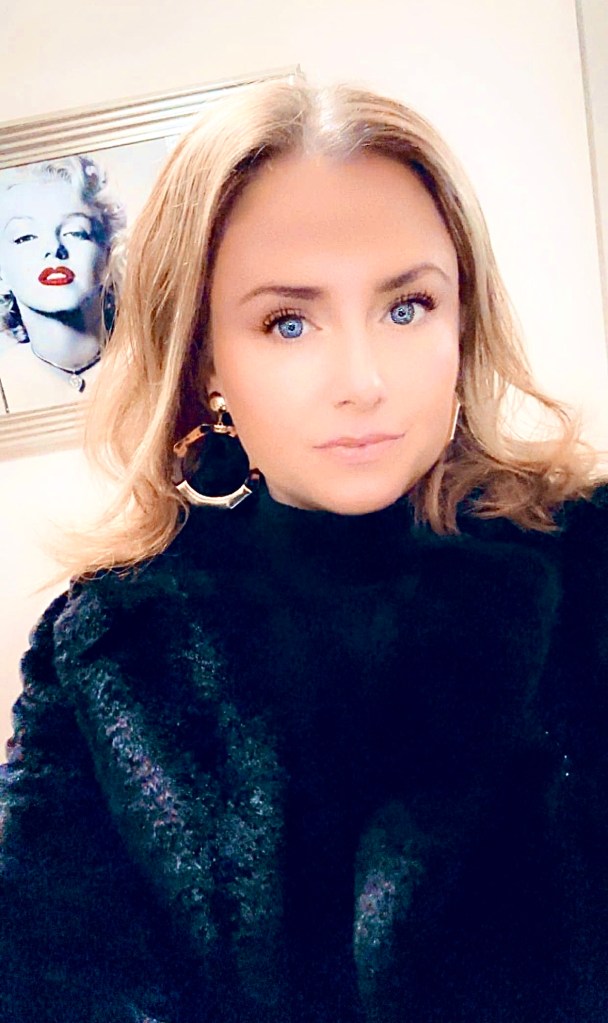
 mundyewalsh
Emma Towey is particularly interested in the female voice. She has a passion for Irish history, literature, and poetry. A Dublin soul with a rural heart, she writes memory, Ireland, motherhood, survival and the voices found between the lines. Her work has been published online and in print by Sparks Literary Journal, The Dark Poets Club, Literature Today, Ragaire, Loughtagalla Times, Autumn Leaves literary broadsheet and the La Rotonde Review.
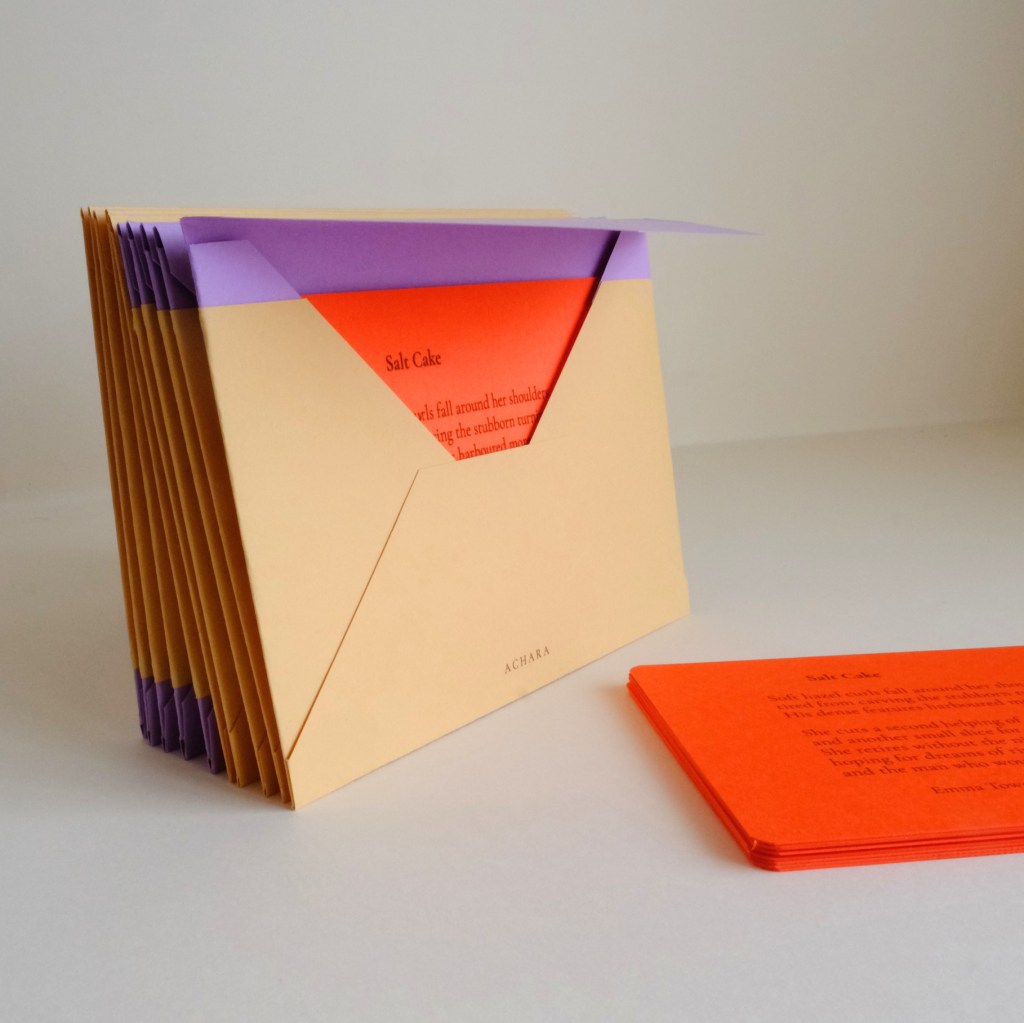
Emma collaborated in the Autumn 2026 edition of Poetry in Motion with the poem Salt Cake, which celebrates folklore and Irish tradition.
Poetry in Motion is a project born from the idea of celebrating the words of a poet, alongside the handwritten words of the sender, to explore what connections such a combination could spark. Find out about this and all things handwritten on A C H A R A.
Have you always wanted to be a writer and poet?
I think the impulse to write has always been there. I was a real bookworm as a child and have always been fascinated by language and literature. When I was about seven, my Da bought a collection of Shakespeare’s plays and poetry. I remember sitting down and reading them, and even though I understood very little, I was captivated by the language. Looking back, I think that says quite a lot about how I have always responded to literature. Words have a way of drawing us in before you fully understand them.
I was writing poetry by my mid-teens and would regularly submit poems to our annual school magazine. They were mostly teenage-angst type poems, but the desire to express something through poetry was already there. As I got older, particularly during college, the subject matter and influences of my writing changed considerably.
I studied Irish Studies and Theology at Mater Dei, DCU, and my studies opened up a wide range of new influences, from Irish literature, poetry and history. I also studied poetry as Gaeilge, Old Irish and Bardic poetry, which I found fascinating. I became increasingly interested in the way poetry can preserve memory and I think that has continued to influence the way I write.
Teaching English has also kept me very close to literature. The poetry section of the Leaving Certificate course is my favourite part of the curriculum to teach. In some ways, being a teacher and being a writer continually feed into one another. Teaching reminds me to look closely at language, while writing has made me increasingly curious about why certain words or images stay with us. I have always gravitated towards language. Writing was there early on, and it has simply taken different forms as I have grown older.
Who or what inspires you?
I am inspired by people and stories that have somehow survived, particularly when they have survived in places where you might not expect to find them. Irish history is a huge source of inspiration for me, especially the lives of women whose experiences have often been overlooked or reduced to a line or two in the historical record.
I love research, and I can become completely absorbed in it. I am in my element in an archive, knee-deep in old documents. The Board of Guardian Minute Books and Workhouse Registers from the Castlerea workhouse in County Roscommon were a particularly rich source of inspiration. They are very official, bureaucratic documents, but within those pages you can sometimes catch glimpses of individual lives, people who were destitute, sick, orphaned or otherwise vulnerable, whose own voices were rarely recorded.
One woman who stayed with me was Mary McHale, a young woman who gave birth to her son in the workhouse. Her labour was extremely difficult and she suffered catastrophic injuries. The doctor who should have attended her was intoxicated, and the only treatment recorded was chamomile tea and castor oil. There was something about encountering those details in such a cold, official document that really affected me. I wanted to imagine the person behind the record and give her story a different kind of voice through poetry.
Another poem of mine, Poltroon Pride, came from researching the Contagious Diseases Acts of the 1860s, which allowed women suspected of prostitution to be arrested and subjected to invasive medical examinations. I was particularly interested in the women who were wrongly accused and in the imbalance of power between the women being examinedand the institutions that had the authority to judge them. Again, I found myself drawn to the gaps in the official narrative and to the human experience behind the historical record. That is what continually draws me back to this kind of research. I am interested in the people hidden inside the historical facts. Sometimes the smallest fragments are the ones that stay with me most and can be the inspiration for a collection of poems.
What is your process from ideation to creation?
My process varies quite a lot depending on the subject matter. My historical poems tend to take much longer because the research is such an important part of the creative process. I can spend a long-time reading, following different threads and trying to understand the world surrounding a particular story. I do not like to skim. I want to immerse myself in the detail because often the most interesting things are hidden in the margins or between the lines.
My personal poems develop very differently. I write about motherhood, relationships, mental health, my childhood in Dublin and my family. My Granda Jimmy is a recurring presence in my poetry and is very much my muse. With those poems, I’m not searching through historical sources, instead, I am searching within myself.
I try to write every day, even if it’s only a few notes. If I’m struggling, I will sometimes do a few minutes of speed writing, just writing without stopping to judge or edit. It can be surprising what emerges from that. Often an entire poem begins with something very small and I’ll build from there. The technical work of shaping, editing, and redrafting comes later. For me, the poem usually begins with an image rather than an idea.
Read the full article on my Substack: Creativity Through a Female Lens. You don’t need a Substack account to read the articles and interviews. If you subscribe (free) and support my work, you’ll receive everything by email as soon as it’s published.